Dive Into a Coach Approach® · Level 2
Second Nature
Building the Human Skills That Matter Most in an AI‑Assisted World
Because the human side of healthcare shouldn’t feel like another technique you have to remember. A Coach Approach should become second nature.
You’ve completed Goal Achieved, so you understand the Coach Approach in theory. But as I watched healthcare professionals begin applying it in practice, I noticed something over and over again.
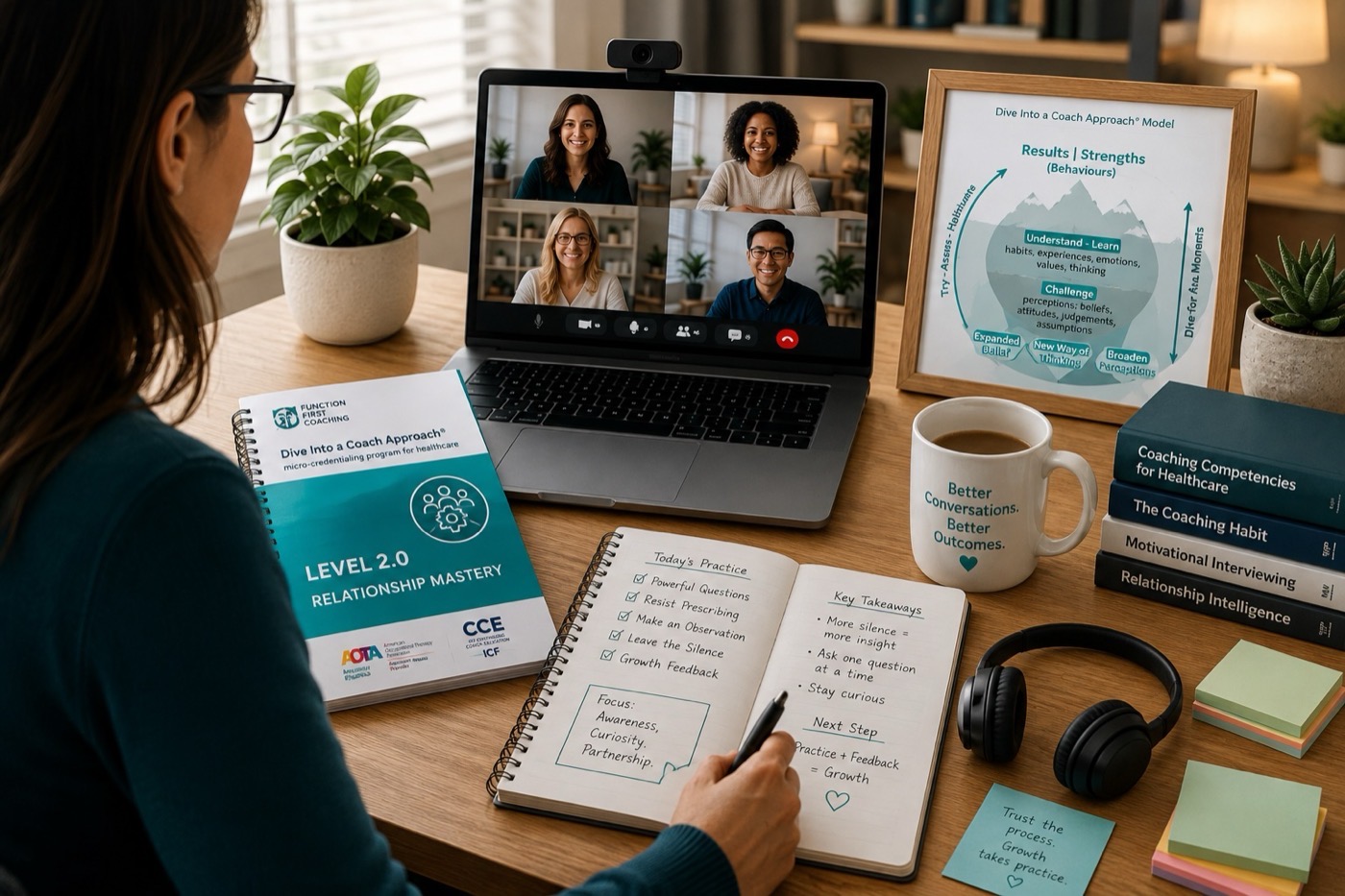
Knowing it and living it turned out to be two very different things.
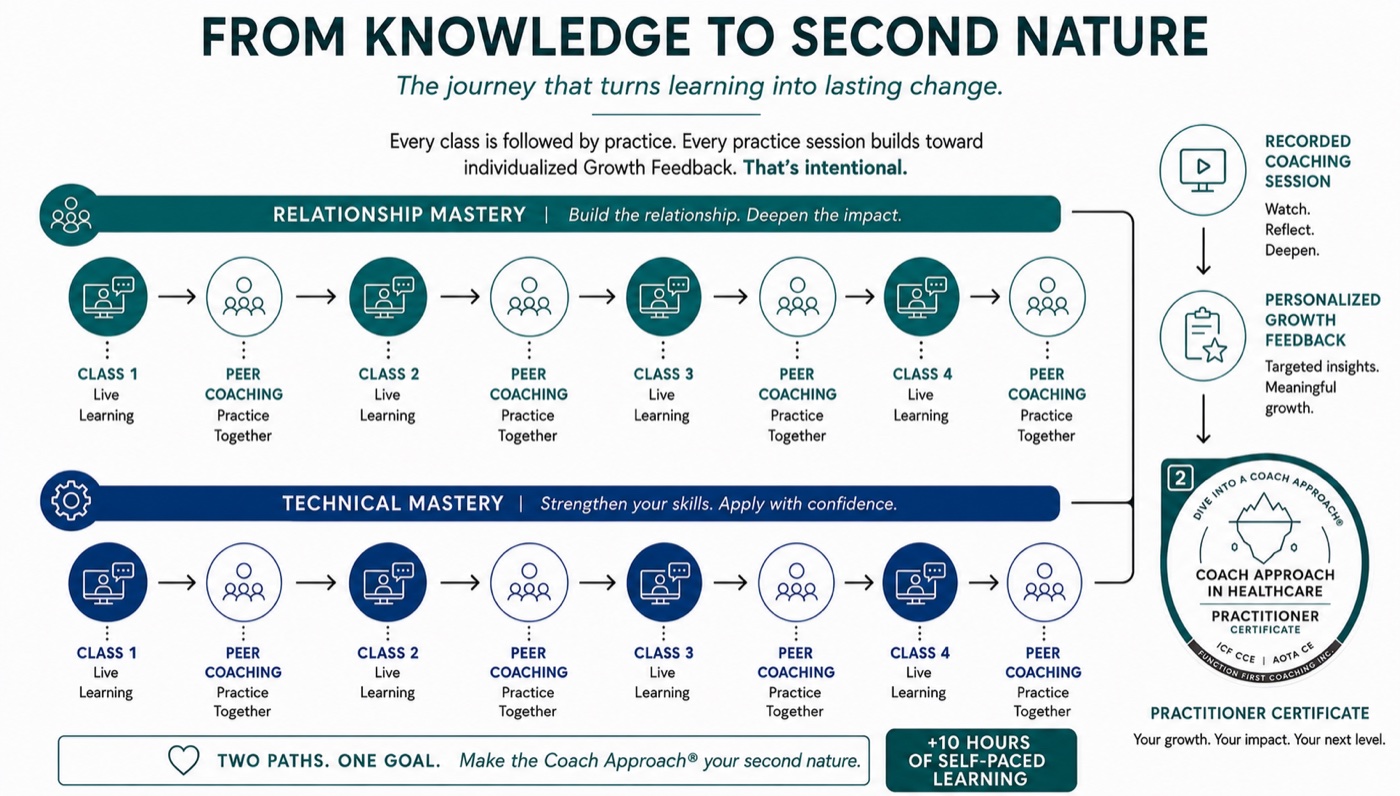
Second Nature is where that gap closes through guided practice, peer coaching, and individualized Growth Feedback from a trained coach who helps you refine how you use a Coach Approach in your everyday healthcare practice.
The best way to understand why that kind of feedback matters is to look at where the gap first showed up for me.
What Twenty Hours of Theory Couldn’t Teach Me
It wasn’t in a theory I misunderstood.
It was in a blind spot I couldn’t see in myself.
It started in a peer coaching session, where a certified coach listened for everything I didn’t know I was doing.
Just like you may feel now after completing Goal Achieved and earning your Coach Approach in Healthcare Professional Certificate, I had the knowledge under my belt. I understood the theory. I felt confident.
I thought I was already a good listener. After all, I’d been working in healthcare for years. Asking questions, listening, helping people think things through. That was my job.
Or at least, that’s what I believed….
I was, of course, nervous that a certified coach was watching me. But I really thought I had this.
Until I didn’t.
I was shocked by what they noticed: three habits were quietly getting in the way of the Coach Approach.
- First, I’d asked several closed-ended questions. I had been intentionally trying not to. I was so sure I hadn’t…
- Second, I was stacking my questions. I’d ask two or three at a time, making it harder for the person I was coaching to know which one to answer.
- Third, I wasn’t leaving enough silence. I wasn’t giving the other person enough room to reflect before I spoke again.
…that I didn’t even remember doing it.
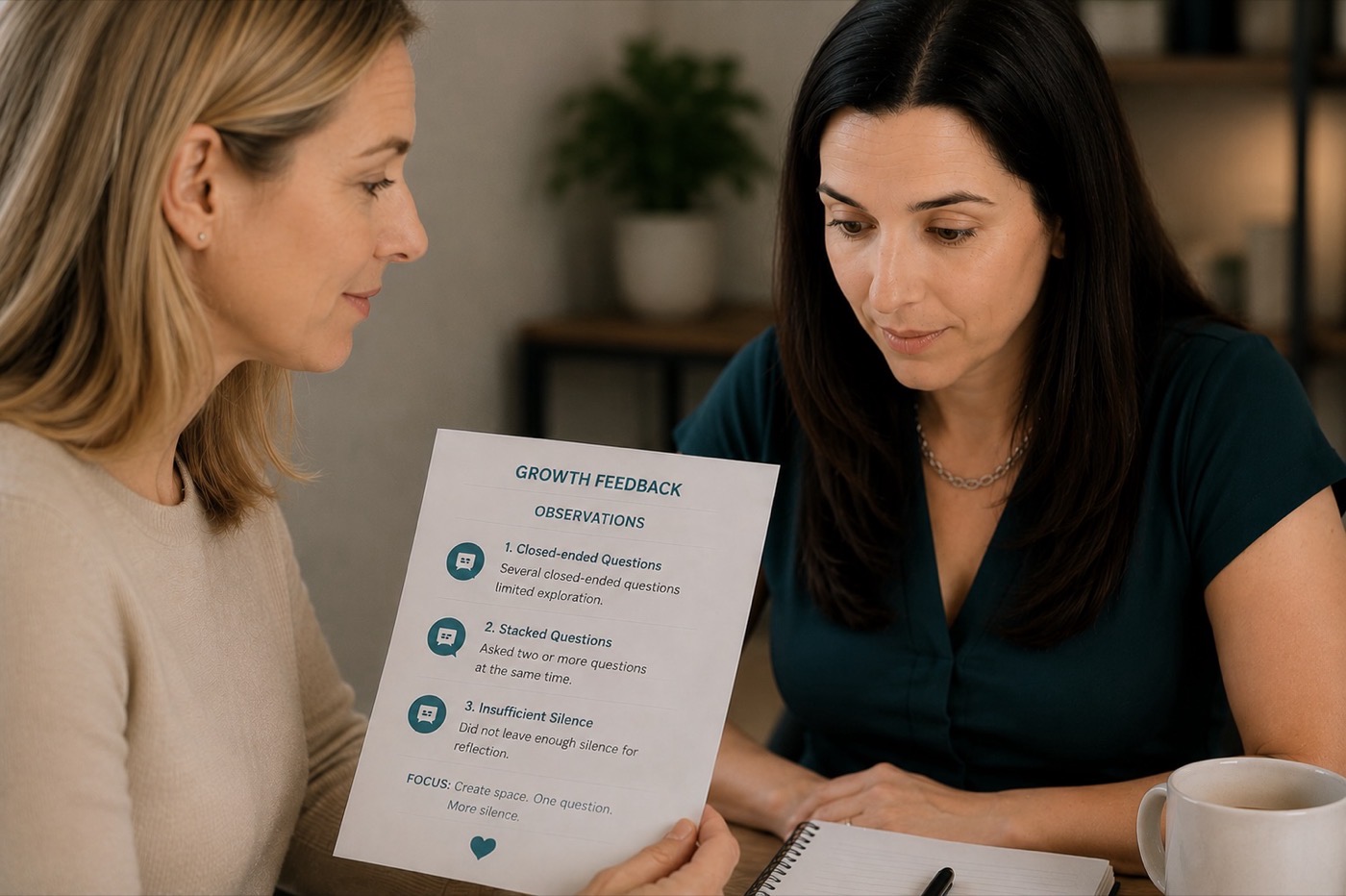
I discovered I wasn’t nearly as aware of my own habits as I thought.
But honestly, the techniques weren’t even the hardest part.
The hardest part was resisting the urge to tell the other person what to do.
Every instinct I had as a clinician wanted to help, which, ironically, was exactly what kept pulling me out of coaching.
Maybe you’ve experienced this too. Have you caught yourself struggling to apply the coaching techniques you learned in Goal Achieved? Or found yourself slipping back into the expert mindset, even when you genuinely wanted to stay curious?
For me, that experience taught me something I couldn’t unlearn: understanding a method and living it are two different things. I realized I needed more practice, and peer coaching became my safe place to make it second nature. Surrounded by peers who were learning alongside me, I could catch habits, experiment with new ones, and receive honest feedback before bringing those skills back to my clients.
Why Practice, Feedback, and Peer Coaching Matter
That experience changed the way I thought about learning.
I realized practice wasn’t simply helpful. It was essential.
Then I came across something that confirmed exactly what I had experienced.
Research by Bruce Joyce and Beverly Showers found that training alone rarely changes behaviour. Even when people understand a new skill, only a small percentage consistently use it in practice. Add demonstrations, practice, feedback, and peer coaching, however, and the likelihood of people actually using those skills increases dramatically.
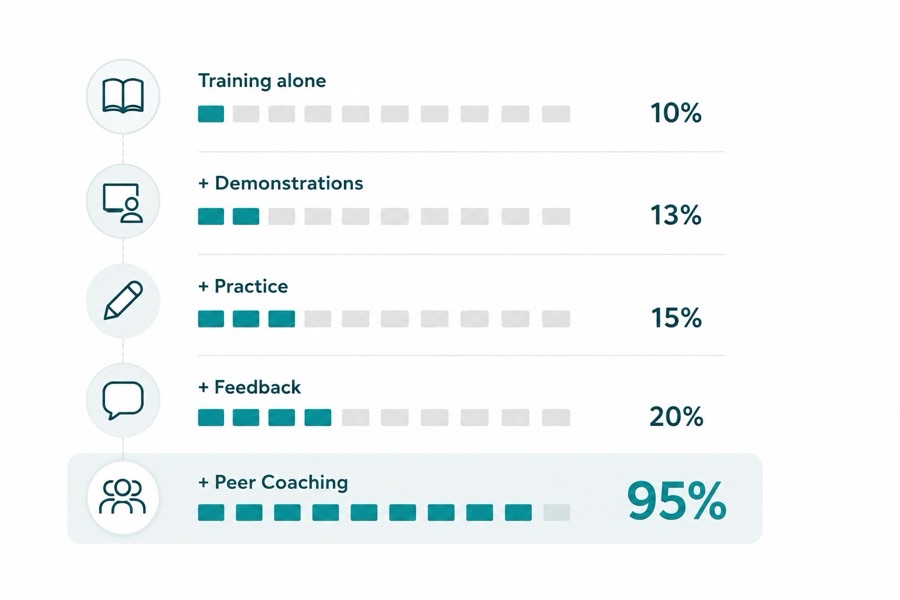
When I saw that research, it validated exactly what I had lived.
No wonder twenty hours of learning hadn’t been enough.
No wonder I needed practice.
No wonder I needed feedback.
Second Nature was intentionally designed around those same principles. And today, those same principles matter even more. As AI becomes increasingly capable of generating information, the ability to build trust, navigate complexity, and facilitate meaningful behaviour change becomes even more valuable.
Ready to move beyond theory? Join Second Nature and begin practicing the Coach Approach with peer coaching, individualized Growth Feedback, and Relationship Intelligence.
Enroll in Second NatureI Wasn’t the Only One
As more healthcare professionals completed Goal Achieved, I started hearing the same questions over and over.
- “How do I use this with this specific client?”
- “I’m struggling to do this in fifteen minutes.”
- “What if I can’t get buy-in?”
I certainly had those questions myself. You?

More theory wasn’t what we needed.
What we needed were the human skills AI should not replace: guided practice, meaningful feedback, relationship intelligence, and the confidence to use them in real clinical conversations.
We needed more opportunities to practice using a Coach Approach in the situations we actually face every day in healthcare.
That’s when I knew Goal Achieved wasn’t the end of the journey.
It was the beginning of Second Nature.
So I asked myself:
What else would help healthcare professionals make this approach second nature?
Peer coaching and feedback were only part of the answer.

Building Second Nature
What was the coaching curriculum I wished I’d had?
The more I thought about it, the clearer something became.
The biggest tool in coaching isn’t a model, a framework, or a technique.
It’s you.
That’s even more true in the age of AI. Technology can support clinical reasoning, but it can’t replace your therapeutic presence, judgment, empathy, or the quality of the relationship you build with another human being.
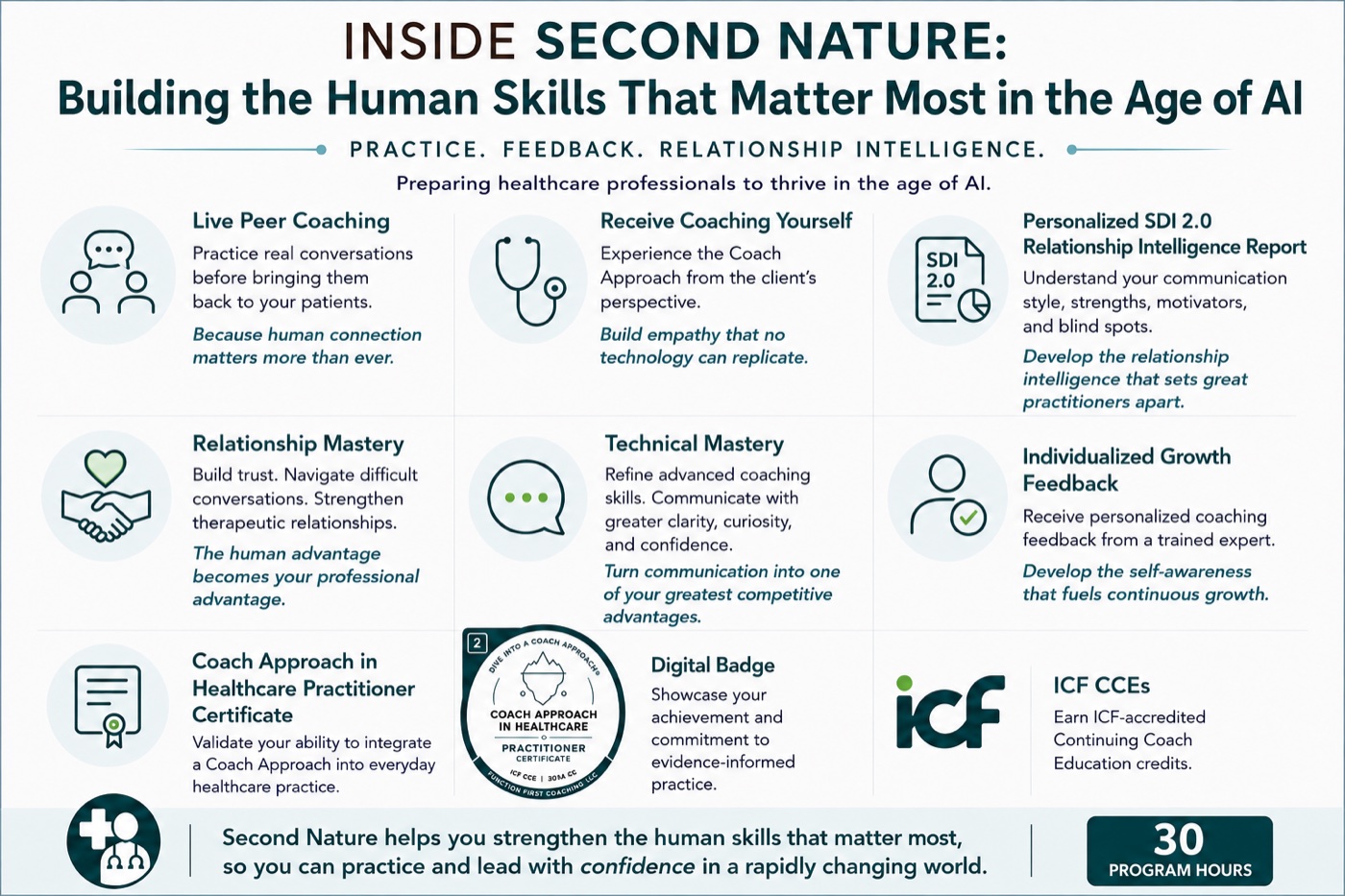
10 Hours of Self-Paced Learning
Second Nature also includes:
- Level 2 Coaching Demonstrations — 7.5 hours
- Integrating Mindfulness into Coaching and Healthcare — 2.5 hours
How you naturally listen.
The strengths you lean on without even realizing it.
What motivates you.
How you respond when someone disagrees with you.
All those habits that quietly shape every conversation you have.
In healthcare, we often talk about the therapeutic use of self. I had always believed mine was strong. But I also realized something.
Understanding myself at a deeper level would help me use a Coach Approach more effectively in my practice. Not because I needed to become someone different, but because I wanted to become more intentional about the person I was already bringing into every conversation.
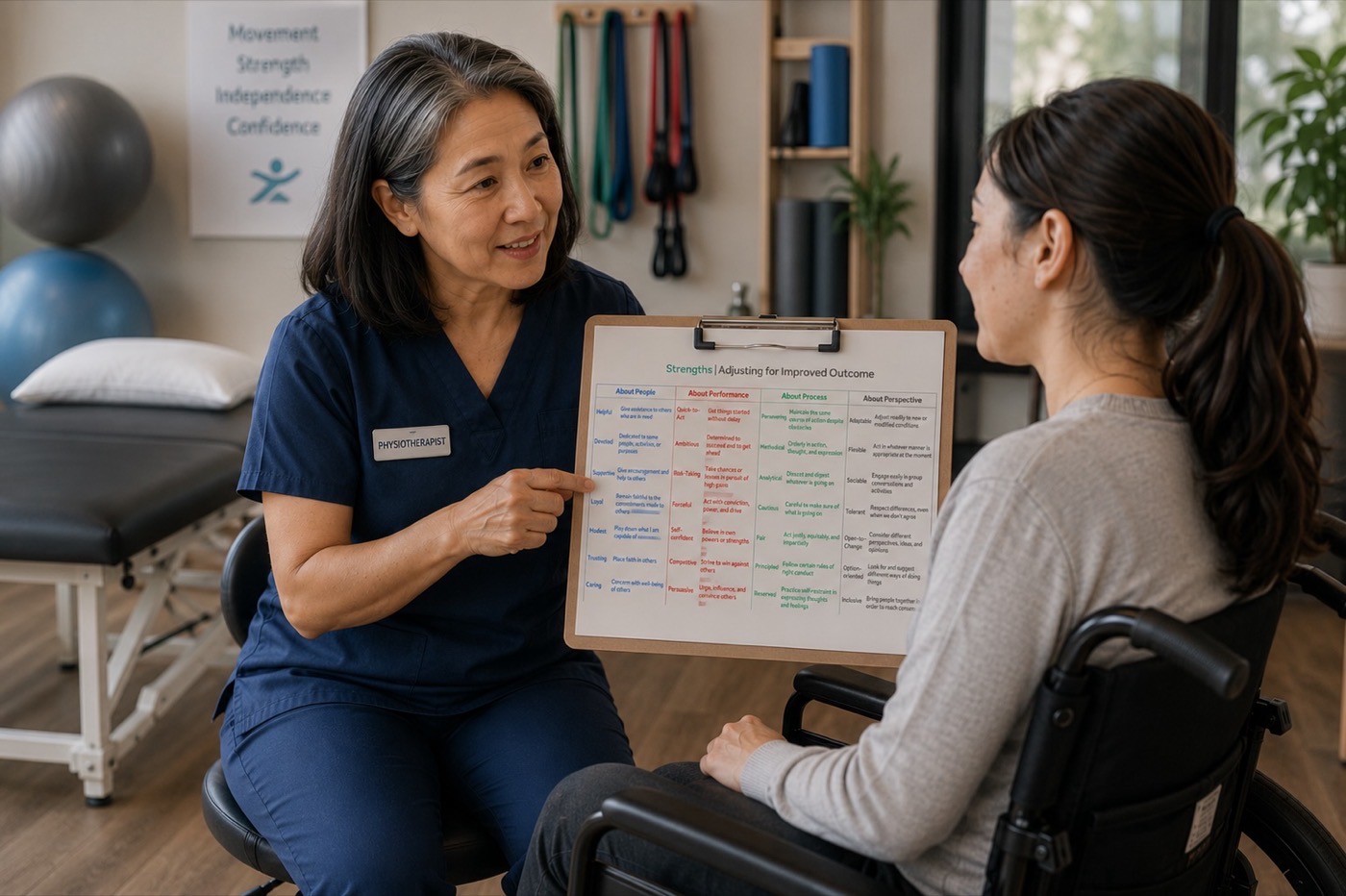
When I received my personalized Strength Deployment Inventory (SDI 2.0) assessment during my own coach training, it immediately stood out to me.
It didn’t tell me anything completely new about myself. It confirmed some things I already knew.
But it gave me a much deeper understanding of why I work the way I do, how I communicate, and how I show up under pressure. It deepened my understanding of both myself and others. I became more intentional in how I used a Coach Approach with my clients, which made those conversations more impactful and ultimately led to better outcomes.
Something else surprised me, too. The learning didn’t stay at work. I found myself having better conversations outside of work as well. The same relationship awareness that strengthened my clinical practice also strengthened my personal relationships.
As more healthcare teams began completing Second Nature together, I noticed another unexpected shift. They weren’t just having different conversations with patients. They were having different conversations with each other.
The SDI 2.0 gave them a shared language for talking about strengths, motivation, and communication in ways that felt constructive rather than critical. Managers could give feedback without people feeling judged. Colleagues could use coaching skills with one another more naturally. Even conversations with patients began to change.
Some clinicians started sharing the SDI strengths directly with their patients, asking questions like, “Which of these strengths might help you move toward the goal we just created together?” Instead of focusing on what patients lacked, conversations shifted toward the strengths they already possessed.
I wanted other healthcare professionals to experience that same professional and personal growth. Deciding to become certified to use the SDI 2.0 was an easy decision for me since without that certification, I couldn’t bring the SDI 2.0 into Second Nature. It wasn’t about adding another credential to my résumé. It was about helping healthcare professionals better understand the person bringing the Coach Approach into every conversation.
If the biggest tool in coaching is you, how well do you really know that tool?
If you’re ready to better understand the practitioner you bring into every conversation, could Second Nature be the next step in your Coach Approach journey?
Start My Second Nature JourneyStepping Into Real Practice With Peer Feedback
Once I understood myself better, the next question became obvious.
Understanding yourself is only the beginning.
How do you turn that awareness into everyday practice?
Self-awareness doesn’t automatically change the way you use a Coach Approach.
Practice does.
That’s why Second Nature isn’t simply a course you complete.
It’s a place to practice.
Throughout the program, you’ll coach your peers on real topics that matter to them while experiencing something just as valuable yourself.
You’ll also have the opportunity to be coached.
That was one of the greatest gifts of my own coach training.
As healthcare professionals, we’re so used to helping others that we rarely experience what it’s like to be on the other side of the conversation.
Being coached deepened my understanding of the Coach Approach in ways that theory never could.
It also reminded me what it feels like to be truly listened to.
As you continue practicing, you’ll naturally begin integrating more advanced coaching techniques into your conversations. Not because you’re trying to remember another tool, but because you’re using them in meaningful conversations, receiving feedback, reflecting, and trying again.
That’s how new habits are built.
How often do you have the opportunity to practice new communication skills in a safe environment before bringing them back to your clients?
That’s where individualized Growth Feedback becomes invaluable.
The goal isn’t perfection.
The goal is awareness.
Because once you become aware of a habit, you have the opportunity to change it.
That’s exactly what happened for me.
And it’s the experience I wanted every participant to have.
Throughout Second Nature, you’ll receive individualized Growth Feedback highlighting the coaching competencies you’re already demonstrating well and the habits that deserve your attention next.

Not to judge your coaching.
To help you refine it.
Because sometimes another trained set of ears can hear what we simply can’t hear ourselves.
If someone listened to one of your coaching conversations today, what strengths would they notice? And what might still be hiding in your own blind spots?
When the Coach Approach Becomes Second Nature
By the end of Second Nature, something subtle begins to happen.
You stop thinking so hard about the techniques.
You become more comfortable with silence.
Your questions become more intentional.
You notice yourself resisting the urge to solve problems quite so quickly.
Your coaching begins to feel less like something you’re trying to remember…
…and more like a natural extension of who you already are.
That’s why we call it Second Nature.
What Healthcare Professionals Are Saying
Real graduates of Dive Into a Coach Approach®, in their own words.
-
“This course has turned the theory into practice. I feel like my understanding and skill in the application of the coaching approach has improved significantly. I have a clearer idea of how to improve my coaching and areas that I feel more comfortable with and strengths I need to further develop. Hélène embodies a coach approach in everything she does and it is present in all the ways that the course is structured and your interactions with your students. Every part of each module is created with care and expertise.”
-
“Level 2 gave me confidence in applying the Coach Approach with clients and colleagues. The practice sessions were invaluable, and the personalized assessment provided deep insights. Great value for healthcare organizations.”
-
“The Coach Approach training provided powerful, easy-to-implement tools for my practice with parents and children. It enhanced my listening and reflection skills, helping me collaborate more effectively and recognize parents and children as their own best experts.”
-
“This experience was valuable in developing my skills, increasing my practical knowledge, and enhancing my confidence in applying what I learned.”
-
“The Level 2 was an eye opener when acquiring and understanding my personalized assessment report. I left with more tools and more confidence than anticipated to support me to manage my team more effectively.”
-
“The DICA Level 2 course provided valuable techniques and insights for working with future clients. I appreciated the mix of learning from others’ experiences, observing coaching sessions, and practicing through peer coaching. The format was engaging and encouraged skill-building every step of the way!”
-
“Hélène is one of the best master coaches I have had the privilege to learn from. She is not only an exceptional mentor, but also a trusted friend whose wisdom, presence, and generosity consistently elevate those around her. Learning with her is an honor I deeply value.”
-
“Hélène Thériault's Dive into a Coach Approach® program is exceptional! Rich in content, well-paced, and comprehensive—it's a perfect "Ten!" Impressive how Hélène condensed extensive coaching trainings into a short CEU course, clear, impactful, and practical. Her teaching techniques are engaging and fun. Every healthcare organization needs this material!”
-
“This training is a MUST for any healthcare professional! I've been able to apply the learning immediately not only in my role as a pediatric occupational therapist but also in my leadership role.”
-
“This course gave me creative tools and strategies to help clients achieve more meaningful goals and outcomes. I’m inspired by the power of metaphors to deepen insights and feel more confident in my coaching skills. The coach approach has enhanced my practice, allowing me to offer unique and impactful services to my clients.”
-
“Hélène's engaging and interactive approach to delivering content was a breath of fresh air. The value it can bring to teams is immense, helping foster effective collaboration and ultimately improving patient outcomes.”
-
“Training with Hélène boosted my leadership confidence and provided new tools for patient care. The courses offered valuable insights into my strengths and weaknesses, enhancing my teamwork and client interactions. I look forward to continuing my development with her guidance.”
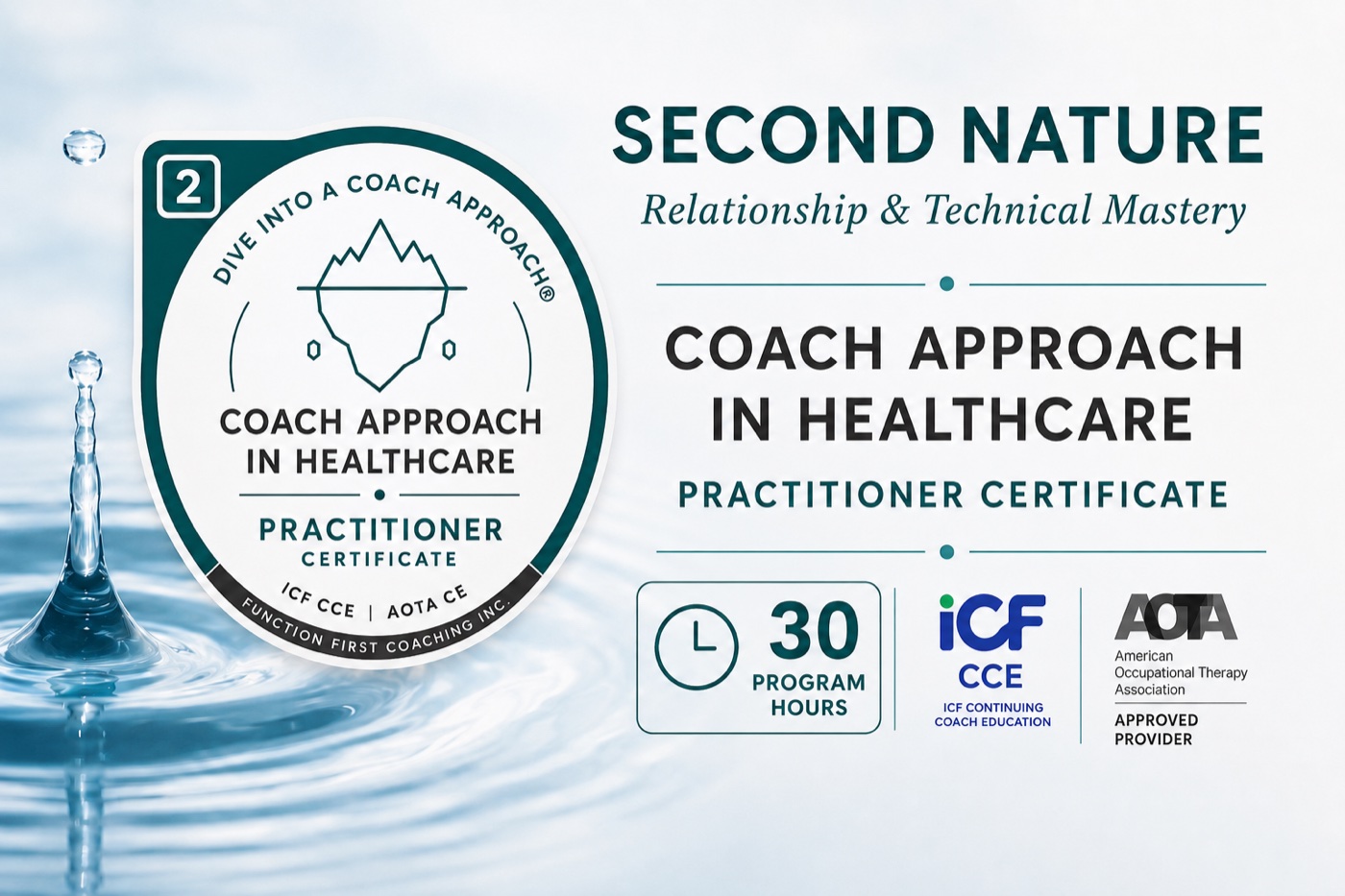
Coach Approach in Healthcare Practitioner Certificate
Second Nature builds on everything you learned in Goal Achieved and brings it to life through guided practice, peer coaching, expert Growth Feedback, and Relationship Intelligence.
When you complete Second Nature, you’ll earn your:
- 30 hours of healthcare-specific coaching education
- Coach Approach in Healthcare Practitioner Certificate
- Digital Badge
- 20 ICF-accredited Continuing Coach Education (CCE) credits: 18 Core Competencies and 2 Resource Development
- 10 additional Core Competency-aligned education hours
- 2.0 AOTA Continuing Education Units (CEUs)
- NBHWC Continuing Education Credits through Integrating Mindfulness into Coaching and Healthcare
More importantly, you’ll leave with greater confidence in your ability to use a Coach Approach naturally, intentionally, and consistently in your everyday practice.
2026 Live Cohort Schedule
All live classes are held on Tuesdays from 8:00–9:30 a.m. Pacific Time (PT).
- Class 1 September 15, 2026
- Class 2 September 22, 2026
- Class 3 September 29, 2026
- Class 4 October 20, 2026
- Class 5 October 27, 2026
- Class 6 November 10, 2026
- Class 7 November 17, 2026
- Class 8 December 8, 2026
Peer-coaching sessions are scheduled separately with your Diving Partner. Recordings of the live classes will remain available through December 15, 2026.
Ready to Make the Coach Approach Second Nature?
If you’ve reached the point where you’re no longer looking for more information, but for meaningful practice, honest feedback, and the confidence that comes from using these skills every day, I would love to continue this journey with you.
Second Nature isn’t about becoming someone different.
It’s about becoming more intentional in the practitioner you already are.
Join hundreds of healthcare professionals who are transforming the Coach Approach from something they know…into something they naturally do.
Start My Second Nature Journey